
The key to a successful work is prayer.
A common phrase about opportunities is, “When life gives you lemons, make lemonade.” When facing a difficulty, make the best out of it.
But is it ever that simple, really? Probably not.
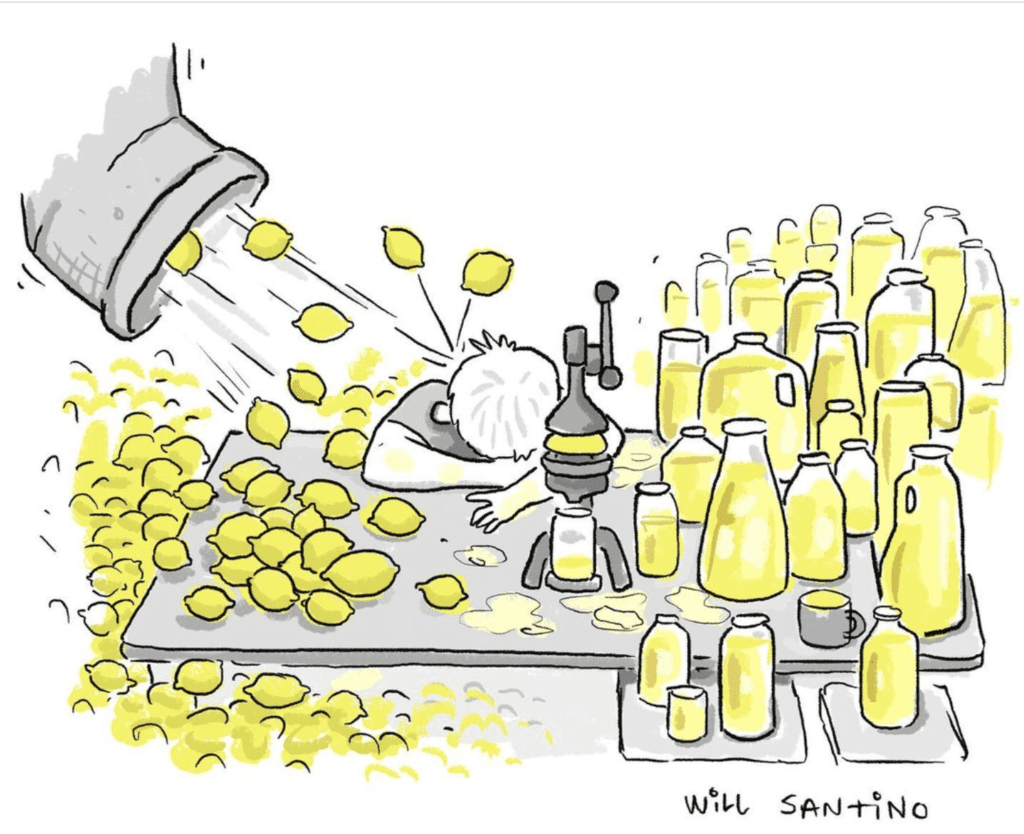
On Niddah 70b, we encounter a series of interesting questions, one of which I want to explore together:
The Sages asked: What should a person do to become wealthy?
Already, we’re in interesting territory for the Talmud. On one hand, we know from Pirkei Avot, “Who is wealthy? One who is happy with their portion.” That’s great, good spiritual advice.
On the other hand, having resources can make life much easier. The rabbis were always practical folks. Let’s see how they guide us here:
Rabbi Yehoshua said to them: One should increase their time and efforts in trade and conduct their business with faith. They said to Rabbi Yehoshua: Many people have done so, and it was not effective. Rabbi Yehoshua replied: Rather, they should ask for mercy from the One to Whom wealth belongs, as it is stated: “Mine is the silver, and Mine the gold, says the Lord of hosts” (Haggai 2:8).
Two efforts make a difference: we should work harder and conduct our business faithfully. This last one comes up in a few other places, but we’ll explore those another day.
The rabbis know this isn’t really enough. Lots of folks work hard!
Rabbi Yehoshua adds the missing ingredient: Prayer.
The Gemara asks: What is the clarification that Rabbi Yehoshua is teaching us? Rabbi Yehoshua is teaching that this, prayer, without that effortful faithful business, one’s wealth will not increase.
I have definitely prayed that a deal goes through or that a new product is successful. But I think Rabbi Yehoshua is adding something deeper here.
He’s telling us there are three keys to “wealth”:
Putting in the effort matters. There is nothing like sweat equity. Putting in the time and making it count is essential to making any progress.
Do business in good faith. You always have to do the right thing. Doing business without integrity is a great way to both fail and bring more evil into the world.
Prayer, reflection, and gratitude make the difference. There has to be a mechanism that keeps us from losing track of the bigger picture. Staying grounded in our sense of self, taking breaks, having compassion for ourselves, and having balance are the only sustainable ways to keep going.
Rabbi Yehoshua reminds us that we have to care for ourselves, regardless of whatever work we’re doing or our goals. Letting ourselves burn out, even when we’re doing all of the right things, like working hard and doing business with integrity, is not a path we can truly take.
Even when the work is unavoidable and unceasing, when the resources aren’t enough, we must find moments to restore that spirit within. One of the ways we can do this is by remembering the lesson from Pirkei Avot, which is that we can be grateful for what we have right now.